Skip to content
USA

Texas visual practice

Texas practice test 3: Questions and answers

Review all 15 selected questions before you try the interactive test again.

Question 1 of 15

Visual for Texas practice question 1

What do red reflective pavement markers indicate?

  1. You are entering a high-speed construction zone
  2. You are traveling in the wrong direction
  3. You are approaching a hazardous railroad crossing
  4. You are nearing a restricted emergency vehicle lane

Correct answer

You are traveling in the wrong direction

Explanation

💡 Red markers are designed to be seen only by drivers heading the wrong way on a one-way street or ramp, signaling immediate danger.
Question 2 of 15

Visual for Texas practice question 2

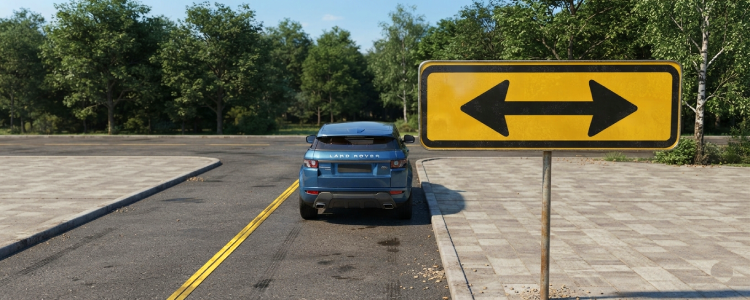
When you see this sign at an intersection, what actions should you take?

  1. Yield the right-of-way or stop before making a right or left turn.
  2. Do not proceed any further.
  3. Keep left.
  4. Share the road with bicyclists.

Correct answer

Yield the right-of-way or stop before making a right or left turn.

Explanation

This sign means traffic must turn left or right; check for cross traffic and yield or stop as needed before turning.

💡 Remember: arrows pointing both ways mean “choose left or right—never straight.”

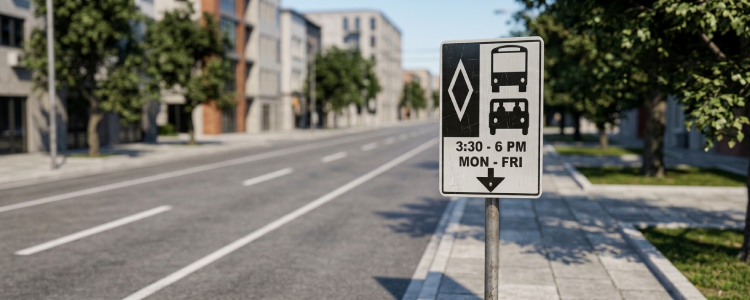
Question 3 of 15

Visual for Texas practice question 3

What does this sign mean?

  1. The lane is for high-occupancy vehicles during specified times.
  2. The lane is for heavy trucks
  3. High-occupancy vehicles are prohibited during specified times.
  4. Cars and buses are prohibited during specified times.

Correct answer

The lane is for high-occupancy vehicles during specified times.

Explanation

The diamond symbol and carpool/bus symbols designate a reserved HOV lane. The posted days and hours show when the restriction applies.

💡 Remember: A diamond marks a carpool lane; the times tell you when it is active.

Question 4 of 15

Visual for Texas practice question 4

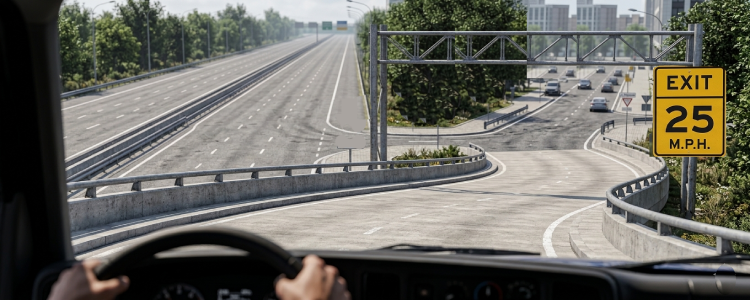
If you notice this road sign, you should

  1. Slow down to at least 25 mph before leaving the highway.
  2. Speed up to 25 mph and pass the vehicle in front of you.
  3. Exit the highway with a speed of 25 mph or less.
  4. Exit the highway with a maximum speed of 70 mph.

Correct answer

Exit the highway with a speed of 25 mph or less.

Explanation

This sign sets the maximum safe speed for the exit ramp; reduce speed before entering it.

💡 Remember: “EXIT 25” means the ramp speed limit is 25 mph.

Question 5 of 15

Visual for Texas practice question 5

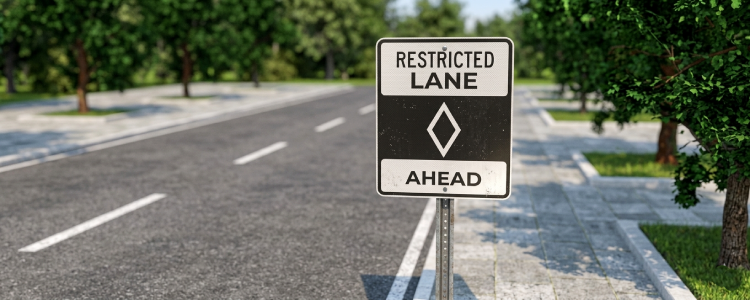
What does this sign mean?

  1. The lane is only reserved for high-speed cars.
  2. The lane is reserved for specific purposes or certain vehicles
  3. The lane is shared for left turns in both directions of travel.
  4. Only right turns are permitted in the lane.

Correct answer

The lane is reserved for specific purposes or certain vehicles

Explanation

This sign warns that an upcoming lane is restricted to authorized vehicles or uses, such as carpools, buses, or bicycles.

💡 Remember: “Restricted” means not every vehicle may use the lane.

Question 6 of 15

Visual for Texas practice question 6

This sign warns drivers that they should

  1. not leave the pavement.
  2. enter the shoulder while traveling at high speed
  3. enter the shoulder while traveling at reduced speed
  4. increase their following distance to 6 seconds.

Correct answer

not leave the pavement.

Explanation

This sign warns that the shoulder may not support a vehicle safely. Avoid driving off the pavement.

💡 Remember: “Soft shoulder” means the roadside is unsafe for tires.

Question 7 of 15

Visual for Texas practice question 7

What does it mean if you cannot see a truck driver in the truck's side mirror?

  1. The truck driver can see you only when braking.
  2. The truck driver cannot see you either.
  3. You are in the truck's safest passing position.
  4. You should drive beside the truck until it turns.

Correct answer

The truck driver cannot see you either.

Explanation

💡 If you cannot see the truck driver in the truck's side mirror, you are in a blind spot (often called a "No-Zone"), meaning the driver cannot see you either.

Question 8 of 15

Visual for Texas practice question 8

What does the sign mean?

  1. Bicyclists should not use this lane.
  2. Bicyclists are only allowed to enter the lane where the sign is set.
  3. A bikeway crosses the roadway ahead.
  4. Bicyclists are prohibited

Correct answer

A bikeway crosses the roadway ahead.

Explanation

This yellow warning sign alerts drivers that a bicycle crossing is ahead.

💡 Remember: A yellow diamond warns of something ahead; the bicycle symbol means watch for cyclists crossing.

Question 9 of 15

Visual for Texas practice question 9

What road marking separates 2 lanes going in the same direction?

  1. A
  2. B
  3. C
  4. Not any of the options mentioned above.

Correct answer

Not any of the options mentioned above.

Explanation

💡 Pavement Markings Pavement markings help you just like signs and signals. They are used to warn and direct drivers and to regulate traffic. ◆ Two-Lane Rural Road with Two-Way Traffic Keep to the right of the yellow center line. You may cross a broken line when passing another vehicle or when the right half of the road is closed. Do not cross the line if it is not safe or it is a solid yellow line. ◆ Three Lane One-Way Roads When each lane on a one way road is marked with a broken white line, you may drive in any lane. When turning from a one-way road, make sure you move into the lane closest to the turn you are going to make well in advance of your turn. ◆ Left Turn Lane Only The only time a vehicle should enter the center lane is at a point where the vehicle will have time to slow down or stop in order to make a safe left turn maneuver. ◆ Multi-lane Highway (Four or More Lanes) Do not cross the double yellow line to pass. Stay in your lane as much as possible. If you are driving slower, keep in the right-hand lane. ◆ Solid and Broken Lines A solid yellow line on your side of the road marks a "no-passing zone." Broken or dashed lines permit you to pass or change lanes, if safe. ◆ White Stop Lines White stop lines are painted across the pavement lanes at traffic signs or signals. Where these lines are present, you are required to stop behind the stop line. ◆ Solid Lines Solid white lines are used for pavement edge lines, shoulder markings, channelizing, transitions, and lane use control. Crossing a solid white line should be avoided if possible. The solid yellow line on the left edge of the road is a guide for drivers to indicate driving to the left of the yellow line is prohibited. This type of yellow line can be found on interstate highways.

Question 10 of 15

Visual for Texas practice question 10

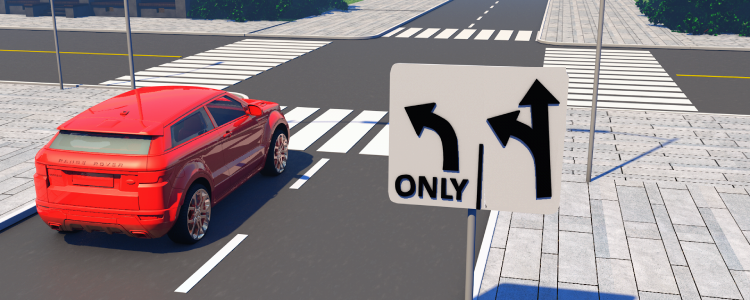
What does this sign mean?

  1. Only left turns are permitted.
  2. Move only in the directions indicated.
  3. Avoid passing a vehicle on the left side.
  4. Passing is permitted in these directions.

Correct answer

Move only in the directions indicated.

Explanation

The arrows show the only permitted travel directions from this lane; other movements are prohibited.

💡 Remember: arrows plus “ONLY” mean you must follow the directions shown.

Question 11 of 15

Visual for Texas practice question 11

The single broken (dashed) white line in this figure means

  1. vehicles traveling in opposite directions.
  2. traffic traveling in the same direction.
  3. the center of a roadway where passing is not allowed.
  4. the roadside curb

Correct answer

traffic traveling in the same direction.

Explanation

💡 Pavement Markings Pavement markings help you just like signs and signals. They are used to warn and direct drivers and to regulate traffic. ◆ Two-Lane Rural Road with Two-Way Traffic Keep to the right of the yellow center line. You may cross a broken line when passing another vehicle or when the right half of the road is closed. Do not cross the line if it is not safe or it is a solid yellow line. ◆ Three Lane One-Way Roads When each lane on a one way road is marked with a broken white line, you may drive in any lane. When turning from a one-way road, make sure you move into the lane closest to the turn you are going to make well in advance of your turn. ◆ Left Turn Lane Only The only time a vehicle should enter the center lane is at a point where the vehicle will have time to slow down or stop in order to make a safe left turn maneuver. ◆ Multi-lane Highway (Four or More Lanes) Do not cross the double yellow line to pass. Stay in your lane as much as possible. If you are driving slower, keep in the right-hand lane. ◆ Solid and Broken Lines A solid yellow line on your side of the road marks a "no-passing zone." Broken or dashed lines permit you to pass or change lanes, if safe. ◆ White Stop Lines White stop lines are painted across the pavement lanes at traffic signs or signals. Where these lines are present, you are required to stop behind the stop line. ◆ Solid Lines Solid white lines are used for pavement edge lines, shoulder markings, channelizing, transitions, and lane use control. Crossing a solid white line should be avoided if possible. The solid yellow line on the left edge of the road is a guide for drivers to indicate driving to the left of the yellow line is prohibited. This type of yellow line can be found on interstate highways.

Question 12 of 15

Visual for Texas practice question 12

What does this sign mean?

  1. Turning right is prohibited.
  2. Turning left is prohibited.
  3. Avoid merging to the left.
  4. You must turn right.

Correct answer

Turning left is prohibited.

Explanation

The red circle and diagonal slash over the left-turn arrow indicate that this movement is not allowed.

💡 Remember: a red slash means “do not,” and the arrow shows which movement is prohibited.

Question 13 of 15

Visual for Texas practice question 13

What does this sign mean?

  1. Travel at a speed of 45 miles.
  2. Prepare to slow down to 45 mph. A speed zone is ahead
  3. Cars merging ahead; avoid accelerating to 45 mph.
  4. A construction ahead, decrease your speed to 45 mph.

Correct answer

Prepare to slow down to 45 mph. A speed zone is ahead

Explanation

The yellow warning sign shows that a 45 mph speed zone is approaching, so drivers should prepare to reduce speed.

💡 Remember: Yellow signs warn of a change ahead; the number tells the upcoming speed limit.

Question 14 of 15

Visual for Texas practice question 14

What does this sign mean?

  1. This road is for cyclists.
  2. This is a no-passing zone for bicyclists.
  3. Bicyclists must not use this road.
  4. Cars are prohibited to pass bicyclists.

Correct answer

Bicyclists must not use this road.

Explanation

The red circle and diagonal slash indicate prohibition. Since the symbol is a bicycle, bicycles are not allowed on this road.

💡 Remember: a red slash over any symbol means “not permitted.”

Question 15 of 15

Visual for Texas practice question 15

What does the sign mean?

  1. The end of Route 47.
  2. The beginning of Route 47 north.
  3. One-way traffic on Route 47 north.
  4. To enter Route 47 north, you need to make a right turn

Correct answer

To enter Route 47 north, you need to make a right turn

Explanation

The route marker identifies Route 47 north, and the right-pointing arrow shows the required direction to enter it.

💡 Remember: the arrow tells you which way to turn for the listed route.