Skip to content
USA

California visual practice

California practice test 3: Questions and answers

Review all 15 selected questions before you try the interactive test again.

Question 1 of 15

Visual for California practice question 1

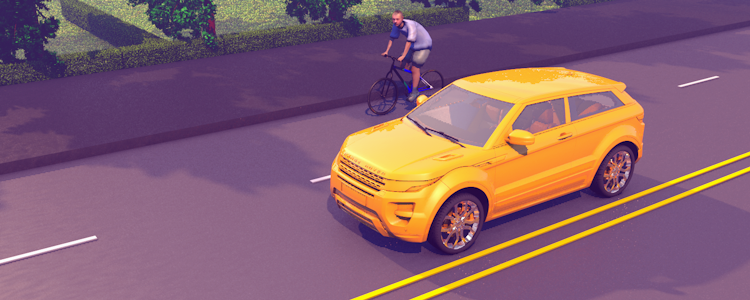
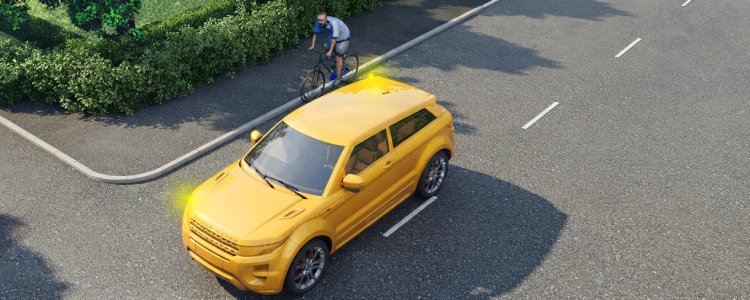
You intend to turn right at the next intersection, but there is a bicycle lane to your right. What should you do?

  1. Make a right turn from your current lane across the bicycle lane.
  2. Don’t make a right turn.
  3. Enter the bicycle lane within 200 feet of the intersection.
  4. Enter the bicycle lane within 10 feet of the intersection.

Correct answer

Enter the bicycle lane within 200 feet of the intersection.

Explanation

💡 By California law, you must enter the bicycle lane within 200 feet of the intersection before making a right turn. You must merge safely into the bike lane (where the line is dashed/broken) to prevent cutting off bicyclists, rather than turning directly from the main traffic lane.

💡When you cannot change lanes to pass a bicyclist, allow at least three feet between your vehicle and the bicyclist. If you cannot give three feet of space, do not pass the cyclist until three feet of clearance can be given. This will help you avoid putting the bicyclist in danger. Remember to: • Give bicyclists enough space so they are not forced into parked vehicles or open vehicle doors. • Only merge toward the curb or into the bike lane when it is safe. • Merge safely behind a bicyclist when preparing to make a turn. • Enter a bike lane no more than 200 feet before starting a turn. • Check for bicyclists when changing lanes or entering traffic. They may be hidden in a vehicle's blind spots. • Be careful when approaching or passing a bicyclist on a two-lane road.
Question 2 of 15

Visual for California practice question 2

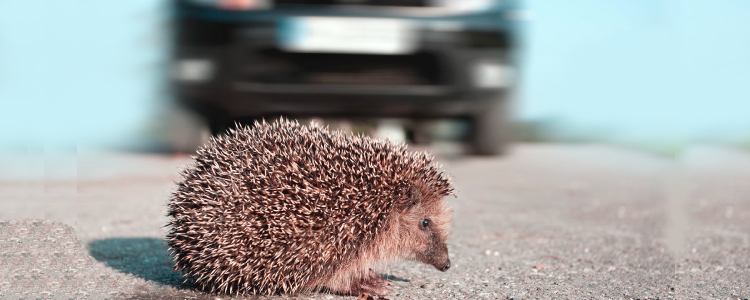
If you notice a stray animal in your path, you should

  1. reduce your speed or stop, if it’s safe.
  2. honk at the animal.
  3. speed up to overtake the animal quickly.
  4. do nothing.

Correct answer

reduce your speed or stop, if it’s safe.

Explanation

Always slow down or stop safely when encountering an animal on the road. Avoid sudden swerving that could cause a collision with other vehicles, and do not honk aggressively, as it may startle the animal and cause it to move unpredictably.

Question 3 of 15

Visual for California practice question 3

Before switching lanes, you must check for traffic

  1. behind your vehicle.
  2. to the side of your vehicle.
  3. both behind and to the side of your vehicle.
  4. only in front of your vehicle.

Correct answer

both behind and to the side of your vehicle.

Explanation

A lane change is a diagonal movement, so your path can overlap with vehicles approaching from the rear or already traveling beside you. Check both areas to make sure the space you are moving into is clear.

Question 4 of 15

Visual for California practice question 4

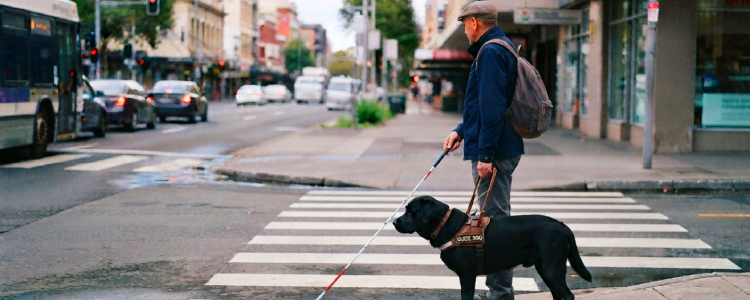
What should you do if a blind pedestrian with a white cane or guide dog is at a crosswalk?

  1. stop your vehicle within 5 feet of the crosswalk.
  2. sound your horn to notify the pedestrian of your presence.
  3. speed up and move quickly.
  4. stop your vehicle within 50 feet of the crosswalk.

Correct answer

stop your vehicle within 5 feet of the crosswalk.

Explanation

When approaching a crosswalk where a blind pedestrian with a white cane or guide dog is waiting, you must stop your vehicle within 5 feet of the crosswalk. This allows the pedestrian to hear your engine noise and safely judge the location of the crossing.

Question 5 of 15

Visual for California practice question 5

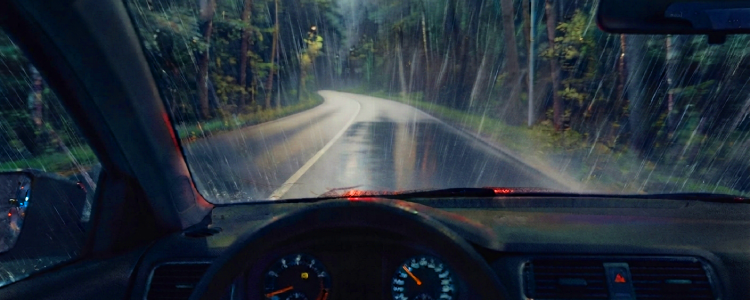
Why should you decrease your speed when there is water on the road?

  1. to avoid wear and tear.
  2. to avoid traction of the tires on the road.
  3. to avoid hydroplaning.
  4. to avoid getting your car wet.

Correct answer

to avoid hydroplaning.

Explanation

Slow down when there is water on the road to prevent hydroplaning, a dangerous condition where your tires ride on a thin layer of water and lose all contact with the road surface, causing you to lose control. 💡Hydroplaning Hydroplaning occurs when driving in wet or rainy conditions. Hydroplaning is when a vehicle rides on water because the tires lose all contact with the road. A slight change of direction, applying the brakes, or a gust of wind could throw the vehicle into a skid. To avoid hydroplaning: • Drive slowly. • Steer around standing water, if possible. • Slow down if you hear sloshing sounds from the tires. • Slow down when changing lanes or direction.

If your vehicle starts to hydroplane: • Slow down gradually. • Do not use the brakes. Sudden braking may cause you to lose control of your vehicle.

Question 6 of 15

Visual for California practice question 6

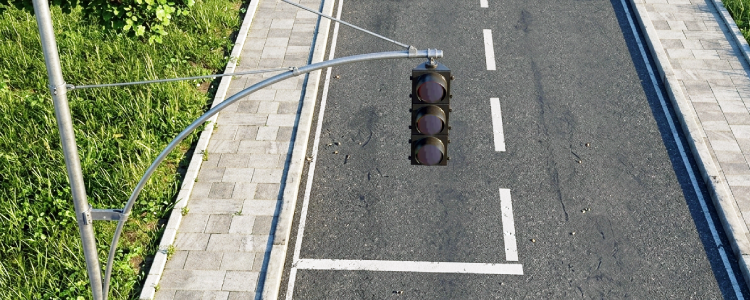
What should you do at an intersection where the traffic signals are blank?

  1. Reduce your speed and prepare to yield to any traffic ahead.
  2. Treat the intersection as if there were Stop signs in all directions.
  3. Proceed as if you had a green light.
  4. Speed up and proceed.

Correct answer

Treat the intersection as if there were Stop signs in all directions.

Explanation

◆ Traffic Light Not Working When a traffic light is not working, stop as if the intersection is controlled by STOP signs in all directions. Then proceed cautiously when it is safe to do so.

Question 7 of 15

Visual for California practice question 7

You have parked your vehicle on a level street. In which direction should the tires point?

  1. Parallel to the curb
  2. Toward the curb
  3. Away from the curb
  4. It does not matter

Correct answer

Parallel to the curb

Explanation

💡 Parking on a Level Street (Straight Wheels) When you park on a level street (no slope, flat surface), make sure your front wheels are kept straight and parallel to the curb so that your vehicle stays in line with the lane and does not obstruct traffic. Always set your parking brake.

Question 8 of 15

Visual for California practice question 8

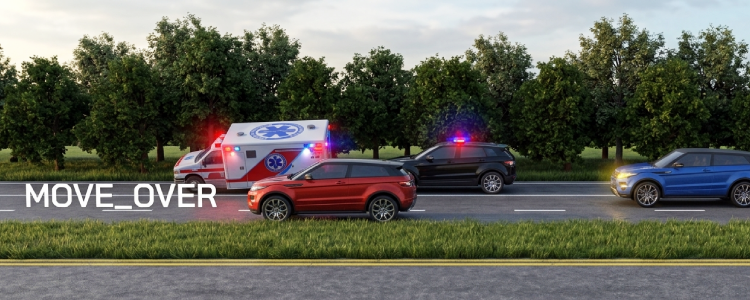
What does California’s "Move Over" law require you to do when approaching a stationary vehicle displaying hazard lights or warning devices on the side of the road?

  1. Safely move over to an adjacent lane if possible, or significantly slow down if you cannot change lanes.
  2. Completely stop your vehicle behind the stopped car until the hazard lights are turned off.
  3. Honk your horn and maintain your speed to warn the driver of your approach.
  4. Speed up to quickly pass the vehicle and clear the lane for other drivers.

Correct answer

Safely move over to an adjacent lane if possible, or significantly slow down if you cannot change lanes.

Explanation

💡Move Over and Slow Down Drivers must move over and slow down for stationary vehicles displaying hazard lights, cones, flares, or other warning devices. This includes: ◆ Stationary emergency vehicles, tow trucks, or road work vehicles. ◆ Any other stationary or stranded vehicle displaying flashing hazard warning lights on the roadside. ⚠️ Starting January 1, 2024 (under AB 390), California's "Move Over" law was expanded to include any stationary vehicle on the roadside displaying hazard lights or warning devices, requiring drivers to move over or slow down—making it a crucial update for the DMV exam.

Question 9 of 15

Visual for California practice question 9

When passing a bicyclist, how much space must you leave between your vehicle and the bicycle?

  1. at least 12 feet
  2. at least 3 feet
  3. at least 1 foot
  4. at least 30 feet

Correct answer

at least 3 feet

Explanation

Picture the required at least 3 feet as a side-to-side buffer between the vehicle and bicycle while passing, not as following distance.

Question 10 of 15

Visual for California practice question 10

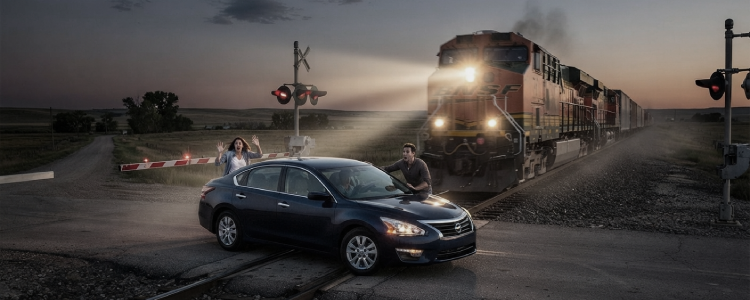
If your vehicle stalls on the railroad tracks and a train is approaching, what should you do?

  1. Immediately exit the vehicle and run diagonally away from the tracks in the direction of the approaching train
  2. Stay inside the vehicle and try to restart the engine
  3. Exit the vehicle and run straight away from the tracks, parallel to the train
  4. Run toward the train to wave your arms and signal it to stop

Correct answer

Immediately exit the vehicle and run diagonally away from the tracks in the direction of the approaching train

Explanation

The diagonal path quickly increases your distance from the tracks while moving you toward the approaching train, away from the direction the train could push the stalled vehicle and debris after impact.

💡Disabled Vehicles on Railroad Tracks If your vehicle stalls or stops while blocking part of a train track with a train approaching and warning lights flashing: • Immediately exit your vehicle. Run away from the tracks diagonally in the direction the train is coming from. Then call 911. If you do not see a train approaching and warning lights are not flashing: • Exit your vehicle. Dial the number located on the railroad crossing posts or metal control box near the tracks. Provide the crossing number (if posted). Tell them a vehicle is on the tracks. Then call 911.

Question 11 of 15

Visual for California practice question 11

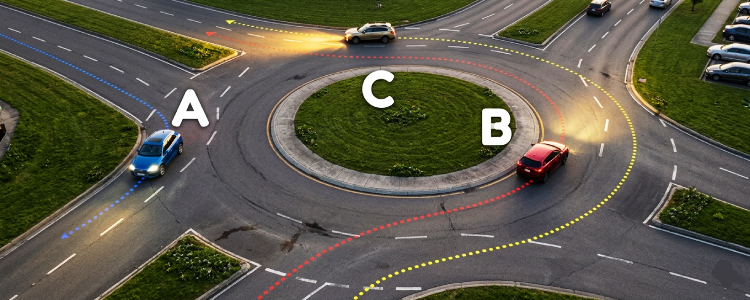
Which vehicle is NOT using the roundabout correctly?

  1. Car C
  2. Car B
  3. Car A
  4. All of the above

Correct answer

Car C

Explanation

💡Roundabouts In a roundabout, traffic travels in one direction around a central island. How to use a roundabout: 1. Slow down as you approach. 2. Yield to all traffic already in the roundabout. 3. Enter heading to the right when there is a big enough gap in traffic to merge safely. 4. Watch for signs and lane markings that guide you. 5. Travel in a counterclockwise direction. Do not stop or pass. 6. Signal when you change lanes or exit. 7. If you miss your exit, continue around until you return to your exit.

If the roundabout has multiple lanes, choose your entry or exit lane based on your destination. This is shown in the image below. To: 1. Turn right: Enter from the right lane and exit in the right lane. 2. Go straight: You can use either the right or left lane, driving straight through the roundabout. 3. Turn left: Enter from the left lane, drive along the inner ring, and exit in the desired direction. ⚠️ Remember which lane to enter from. This will be on the exam!

Question 12 of 15

Visual for California practice question 12

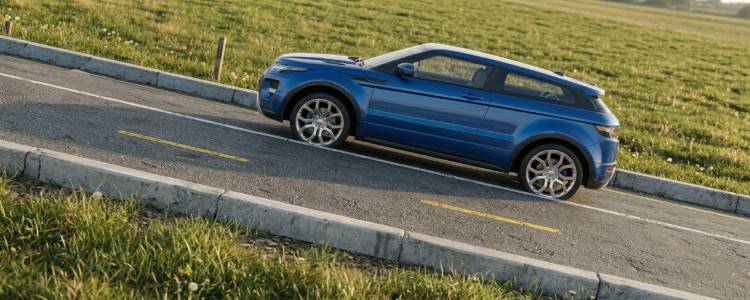
You have parked facing uphill on a steep hill. Where should you turn your wheels if there is a curb?

  1. Toward the curb
  2. Away from the curb
  3. You don’t need to turn the wheels.
  4. Any of the above

Correct answer

Away from the curb

Explanation

Downhill: turn the wheels toward the curb. Uphill: turn the wheels away from the curb. No Curb: turn the wheels toward the shoulder of the road

💡 Parking on a Hill When you park on a hill, your vehicle could roll due to equipment failure. Remember to set the parking brake and leave the vehicle in park, or in gear for manual transmission. To park: ◆ On a sloping driveway: Turn the wheels so the vehicle will not roll into the street, leave the vehicle in park and set the parking brake. ◆ Headed downhill: Turn your front wheels into the curb or right toward the side of the road. ◆ Headed uphill: Turn your front wheels away from the curb (left-towards the center of the road) and let your vehicle roll back a few inches. The wheel should gently touch the curb. ◆ Headed either uphill or downhill when there is no curb: Turn the wheels to the right so the vehicle will roll away from the center of the road if the brakes fail.

Question 13 of 15

Visual for California practice question 13

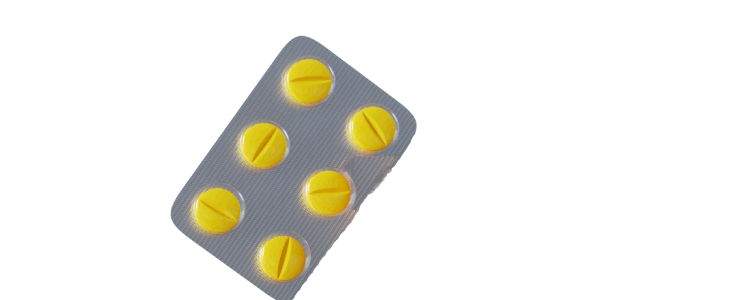
What should you do before driving if you are taking a non-prescription (or prescription) drug?

  1. Check the label for warnings and know its effects.
  2. Drink lots of water.
  3. Ask your pharmacist if it is safe to drive immediately.
  4. Wait 3 hours before you drive.

Correct answer

Check the label for warnings and know its effects.

Explanation

Whether a drug is prescription or non-prescription does not determine driving readiness; its warnings and effects do. Review them before driving so you can recognize whether the drug may affect you.

Question 14 of 15

Visual for California practice question 14

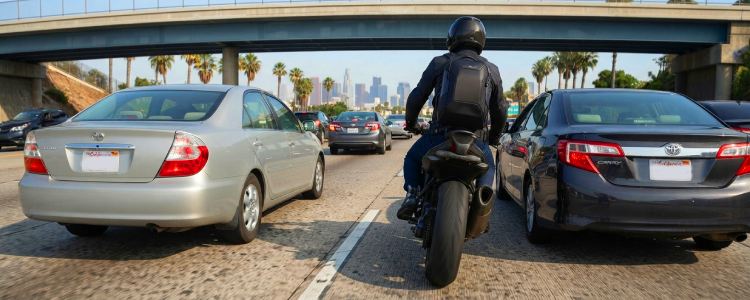
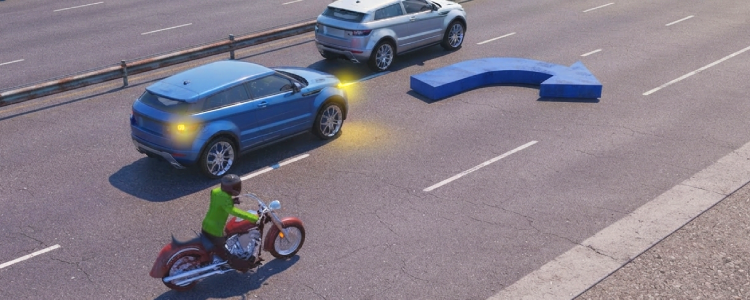
A motorcyclist is lane splitting between lanes of traffic. What is the safest response?

  1. Move toward the lane line to prevent the motorcyclist from passing.
  2. Give the motorcyclist room when possible and never try to pass the motorcycle in the same lane.
  3. Accelerate to keep the motorcyclist behind your vehicle.
  4. Drive beside the motorcyclist in the same lane to guide them through traffic.

Correct answer

Give the motorcyclist room when possible and never try to pass the motorcycle in the same lane.

Explanation

💡 According to California DMV rules: ◆ In California, lane splitting is legal, so drivers of other vehicles are expected to behave predictably and safely. ◆ You must not intentionally block a motorcyclist by moving toward the lane divider, as in Answer 1, accelerate to prevent the motorcyclist from passing, or attempt to share the same lane. The safest approach is to maintain your position within your lane and, when it is safe to do so, move slightly to the right or left to give the motorcyclist enough space to pass.

Question 15 of 15

Visual for California practice question 15

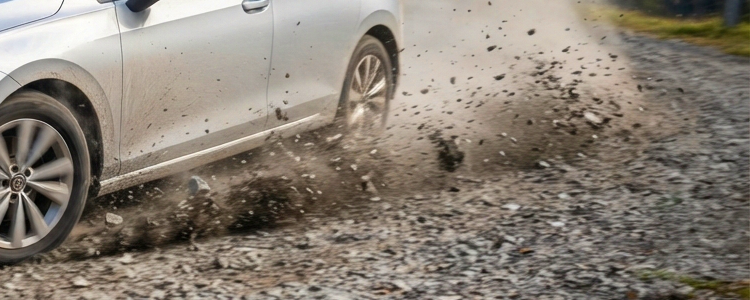
If your wheels drift off the pavement, which response is correct?

  1. Jerking the wheel sharply back onto the pavement is the fastest and safest response.
  2. Grip the wheel firmly, release the accelerator, brake gently, check behind, then carefully steer back onto the pavement.
  3. Accelerate hard before steering back onto the pavement.
  4. Brake as hard as possible and turn immediately toward oncoming traffic.

Correct answer

Grip the wheel firmly, release the accelerator, brake gently, check behind, then carefully steer back onto the pavement.

Explanation

When the wheels leave the pavement, the goal is to keep the vehicle stable before returning. A firm grip, gradual slowing, and careful steering avoid the loss of control that abrupt braking or turning can cause; checking behind helps you assess traffic before moving back onto the pavement.